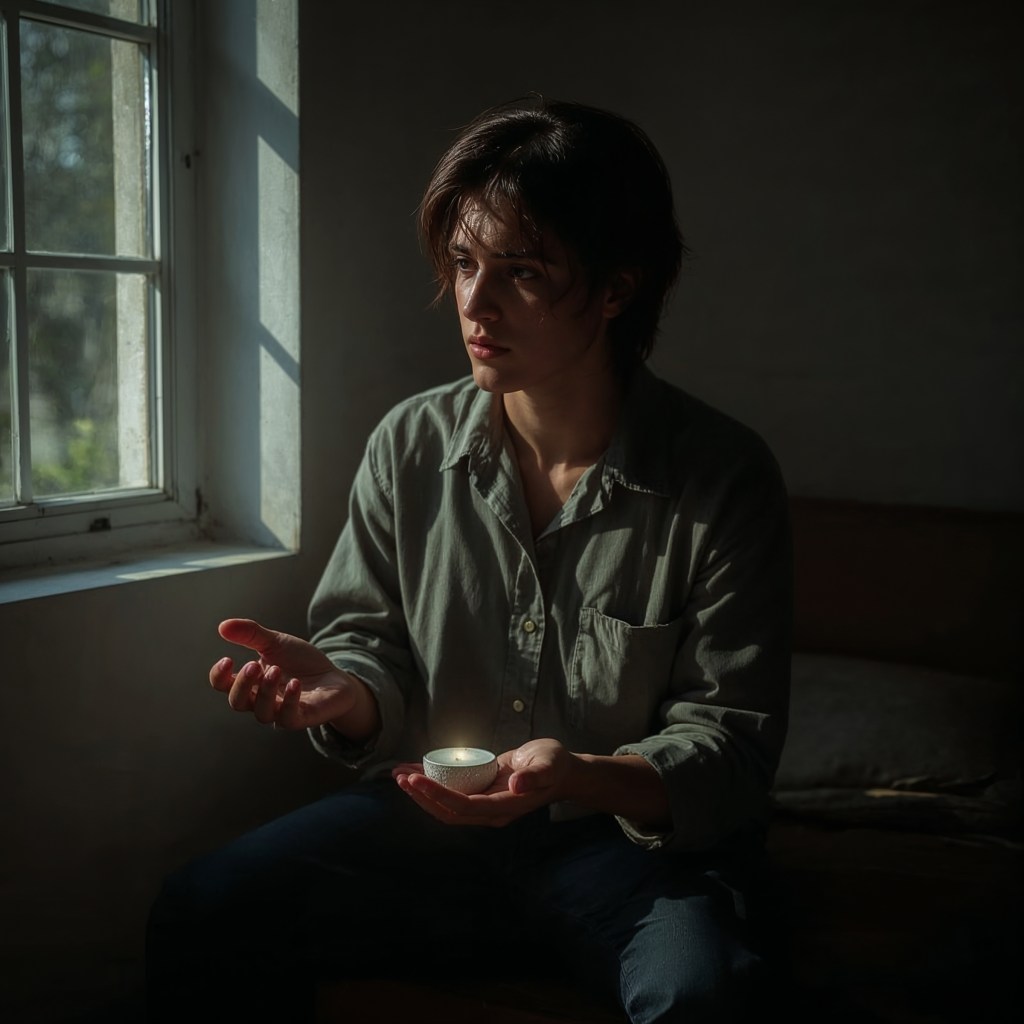
I was sitting and thinking about something recently: knowledge comes with a kind of power. What’s striking to me is not simply that knowledge is powerful, but that what we choose to do with it reveals the kind of power we actually desire. Knowledge can be stewarded in a way that gives life, or it can be wielded in a way that takes life. The actions that flow from knowledge expose the true posture of the heart far more clearly than intentions or language ever could.
Over time, I’ve come to believe that much of humanity’s brokenness is rooted in a desire to enslave to control, dominate, or place one another in bondage. This impulse doesn’t always look overtly violent. More often, it hides beneath systems, authority structures, and even moral certainty. It shows up whenever knowledge is used as leverage rather than as a gift.
A striking example of this can be seen in the splitting of the atom. The same scientific breakthrough led to radiation therapy, which has saved countless lives, and to the atomic bomb, which has taken countless lives and instilled fear on a global scale. The act of splitting the atom was not evil in itself. The knowledge uncovered was not inherently corrupt. What mattered what changed everything was how that knowledge was used.
That realization leads me into a deeper reflection, especially when it comes to spiritual understanding and revelation. When we are entrusted with spiritual truths, what do we do with them? Do we allow them to soften us, to expand compassion, to bring healing and freedom to others? Or do we use them—subtly or overtly as tools for control, as justification for authority, or as a means of elevating ourselves above others?
Spiritual knowledge, like all knowledge, carries power. And power always comes with a choice. It can be expressed as life-giving presence, or as dominance masked in certainty. It can invite freedom, or quietly reinforce hierarchy and fear. The danger is not in revelation itself, but in the heart that seeks to possess it.
This leaves us with an uncomfortable but necessary question: when we gain understanding especially spiritual understanding are we becoming more loving, more free, and more generous toward others? Or are we becoming more rigid, more defensive, and more invested in being right?
In the end, the question is not what we know.
The question is who we become because of what we know and whether the power we seek is the power to give life, or the power to hold it over others.
 In The Heart Of The Father