By
Jennifer M McPherson
Mental health has been part of my story for as long as I can remember.
I grew up around addiction and mental illness. My mother struggled with both, and other family members carried what I now recognize as likely undiagnosed mental health disorders. Even in my own life, there were clear signs—especially during my adolescent years—that I was dealing with internal battles long before I had language for them. Brokenness wasn’t theoretical for me; it was the environment I learned to navigate.
But while I had lived around the effects of mental illness my entire life, my heart for healing didn’t fully awaken until my 30s.
One ordinary day, sitting alone at home, something extraordinary happened. Without warning, a passage of Scripture came alive in me in a way I can only describe as divine. Isaiah 61—specifically verses 1 through 3—was placed in my heart, not as inspiration, but as a blueprint. I knew instinctively that this was not just a verse to quote, but a map for how my life would unfold in bringing healing and transformation.
And then there was the next line:
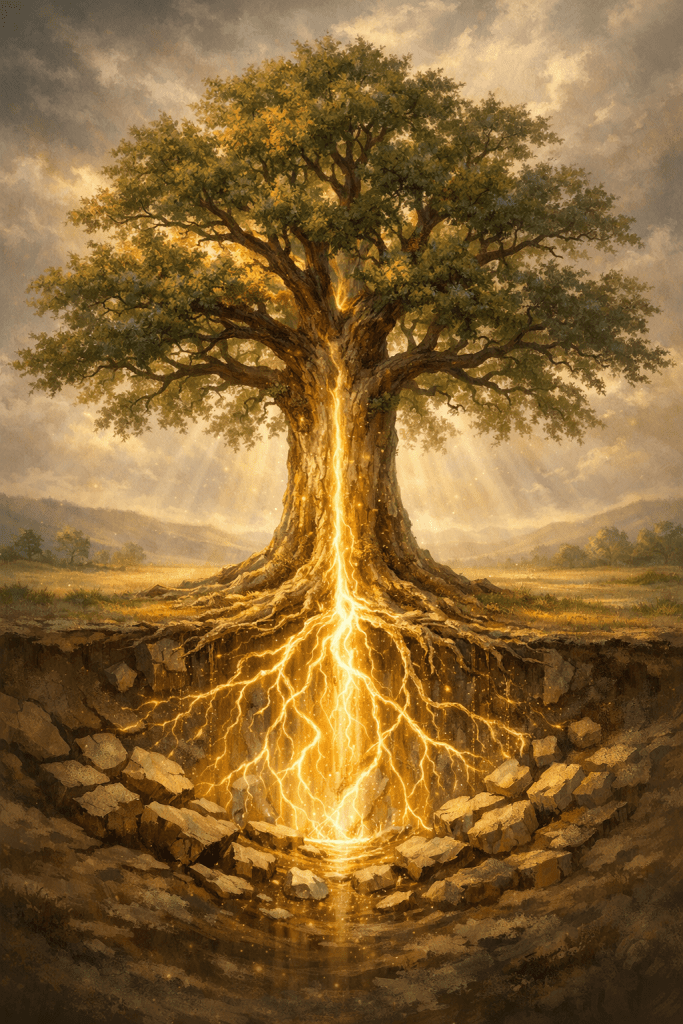
“They will be called oaks of righteousness.”
That phrase has stayed with me ever since.
WHAT DOES IT MEAN TO BE AN OAK OF RIGHTEOUSNESS?
An oak of righteousness is not someone who performs well spiritually. It is someone who has been stabilized—formed, strengthened, and made whole by the inner work of the Spirit.
Not just in the spirit, but in the soul.
Scripture tells us, “I pray that you would prosper and be in good health, even as your soul prospers.” This reveals something critical: our spiritual vitality, our physical health, and our emotional well-being are not separate realities. They are interconnected.
Yet one of the greatest struggles of humanity—and of the church—is our tendency toward division.
We divide spirit from soul.
We divide theology from psychology.
We divide doctrine from lived experience.
We divide people by race, identity, and culture.
But union was always the design.
WHY PERCEPTION MATTERS
Our ability to perceive spiritual reality is directly connected to the health of our soul.
If the soul is fragmented—wounded, splintered, or defensive—our perception becomes distorted. We may be sincere, even passionate, but sincerity does not equal clarity. Scripture emphasizes trained senses, not just practiced gifts.
This helps explain why Scripture repeatedly asks, “Do you not see?” or “Can you perceive it?”
The gospel itself begins with a call out of distorted perception. Good news is preached to the poor because poverty—material, emotional, or spiritual—often comes with deception about identity, worth, and possibility.
MENTAL HEALTH AND SPIRITUAL BYPASS
In counseling, we talk about spiritual bypassing—using spiritual language to avoid addressing psychological and emotional wounds.
Fragmented soul behaviors include isolation, paranoia, chronic judgment, and relational instability. These are not signs of spiritual depth. They are indicators of inner fracture.
Too often, we reward gifting while ignoring wholeness. Platforms are given while souls remain unattended.
You can only give what you possess.
LEAVING EGYPT IS NOT ENTERING REST
Scripture tells us the Israelites physically left Egypt but failed to enter the rest of God.
They left bondage—but they did not enter rest.
Rest is the one thing we are told to labor for.
Rest is integration.
Rest is trust.
Rest is wholeness.
BECOMING OAKS
An oak does not grow overnight. It is rooted, weathered, and resilient.
This is the righteousness Isaiah describes—not performative, but formed.
When our souls are made whole, perception clears.
When perception clears, love flows accurately.
And only then can we truly become agents of healing for others.
 In The Heart Of The Father