“Yahweh is my best friend and my shepherd. I always have more than enough” Psalm 23:1, TPT
The first scripture I ever learned was Psalm 23. And as I sit in a strange season of my life, I keep hearing it echo in my heart: “The Lord is my Shepherd; I shall not want.”
Over the years, I’ve heard this scripture interpreted in many different ways. But today—right here, right now—it has taken on a new and profound meaning for me.
To give a little context, I am a creature of habit. I get very used to the way things are. I notice even the slightest of changes, and if I’m honest, I usually hate any form of change. My natural instinct is to try, with all my might, to get things back to how they were.
This makes me the opposite of easygoing.
I frequently need to be reminded by the Lord to go with the flow and not fight the current.
This season of my life has been marked by change on many levels—relationships shifting, career changes, parental changes, body changes, and so much more. I’ve had to learn how to be okay with adjusting to a new way of doing things, a new rhythm, a new normal.
So when Psalm 23 says, “The Lord is my Shepherd,” and follows it with, “I shall not want,” here’s how I’m hearing it in this season.
If I truly believe He is a good Shepherd, then I have to believe that everything I actually need will be brought to me. If that’s true, then there is no need to live from a place of wanting—striving, grasping, chasing—because what is required for my life will be supplied.
That realization reframes everything.
So take a moment and think about the thing you “want.”
Now consider this: if you truly needed it, you’d have it. And every step you’re taking right now is bringing you closer—not to the wants of a former version of yourself—but to the wants of the healed you, the transformed you, the matured you.
I’ve been seeing this play out lately in my relationships and in other areas of my life. Sometimes I want what a former version of me needed, simply because I don’t like change. But God doesn’t shepherd us backward. He leads us forward—into wholeness.
This truth came to me in the most unexpected—and honestly, the silliest—way. I was watching a movie. Jesus Revolution, to be exact. There’s a scene where a young man is baptized, and something about it gripped me. He didn’t come to the Lord with clenched fists full of assumptions or self-protection. He came with hands wide open.
For weeks, I couldn’t shake that image. Why did it stay with me? Because what I was seeing was the essence of how we must come to the Lord if we ever hope to live in peace.
Open hands. Letting go of what doesn’t align with His heart. Postured to receive everything He longs to pour out. This—this—is humility.
When we come to Him open-handed, He can use us in ways we could never imagine. We are no longer tethered to the weight of this world because we’ve stopped clinging to anything but Him.
When I reflect on my life these past 42 years, I realize something: I have always been a holder. Growing up in chaos, instability, and uncertainty taught me to grip whatever felt safe, even if it wasn’t. I was always searching for stable ground—never realizing the whole time that He was the stable ground I had been seeking.
The truth is, as long as my hands were clenched around something temporal, I was never fully positioned to receive what He had for me in the moment.
This idea pulled my heart back to Isaiah 43:18–19—“Forget the former things; do not remember the things of old.” It doesn’t mean we discard the past. It means we hold it loosely. We keep an open-handed posture that allows God to give and God to take as He leads.
Because the moments I have felt most content, most free, most aligned with Him, were the moments I finally released my grip—and embraced the reality that I am the one being held.
This entire year has been a season of transition for me. A crossing over. A shifting from this to that. And if I’m honest, there were still parts of me that wanted to hold on—to people, to places, to dreams, to familiar rhythms that felt comfortable.
But today… Today I release all of it back to Him.
All the things. All the people. All the places I’ve seen. Every dream. Every joy. Every seed He ever planted in me— Lord, it all goes back to You.
And so I stand here now— On ground You’ve already cultivated, Ground not yet built upon, Ground that is holy because You are in it—
And I say:
Lord, my hands are open, and so is my heart. Here I am, Lord—send me.
This morning while I was praying, I saw something that honestly broke my heart—not just for me, but for the Body of Christ as a whole.
I saw spiritual babies.
Some were aborted before they ever had the chance to form. Others were fully born but left lying unattended. And as I looked at them, I knew exactly what they represented: the gifts, callings, assignments, ministries, dreams, and blueprints God Himself planted inside His people… the very things we were supposed to nurture, carry, and bring into maturity. Yet somewhere along the way, many of them were abandoned.
Not because God changed His mind. Not because the seed was wrong. But because we got discouraged.
As I sat with this, the Lord began to speak to my heart. He reminded me of the things He has conceived in us—visions, blueprints, songs, books, movements, callings—and how easily we drift from them when the process doesn’t unfold the way we imagined. We don’t walk away because we’re rebellious. Most of the time, we walk away because something felt right in the moment. We told ourselves stories like:
“Maybe I misheard.” “It shouldn’t be this hard.” “This other opportunity seems better.” “I’m probably not qualified for this.” “It’s taking too long.”
And without even realizing it, we step away from what God asked us to steward. We choose movement over maturity, distraction over devotion, momentum over faithfulness. We walk away from a spiritual pregnancy because we didn’t understand the season we were in.
Here’s what the Lord reminded me so clearly: Bringing anything God entrusts to you into maturity requires two seasons—one that feels like movement, and one that feels like stillness.
And we love movement. We thrive on momentum. We like to feel like something is happening.
But when God leads us into a season of divine stillness, we often misinterpret it. Stillness feels like failure. It feels like something died. It feels like God must be shifting us somewhere else. So we walk away. Not because the word changed, but because the silence made us uncomfortable.
And in that misunderstanding, the baby gets left unattended.
What I saw in the Spirit grieved me: assignments crying out with no one to nurture them, callings starving because no one stayed long enough to feed them, foundational works that were started but never finished because the builders walked away before the walls could go up. These weren’t man-made ideas. These were God-breathed destinies—left untouched, uncovered, and unnurtured simply because someone got weary.
Heaven felt the weight of it.
And in the middle of that weight, I heard the Lord ask a simple but deeply personal question:
“If not you, then who?”
If not you, who will bring to pass what I placed inside of you? If not you, who will nurture what I entrusted to your care? If not you, who will protect the very thing I conceived in your spirit?
God is not looking around the room trying to find someone else. He already chose you.
He planted it in your womb. He breathed it into your spirit. He aligned it with your identity and design. He entrusted it to you because it fits you.
No one else can steward what was assigned to your life.
This word is not correction; it’s mercy. It’s invitation. It’s realignment.
The Lord is calling many of us back to the things we left behind—those assignments we thought we weren’t ready for, the visions we thought were too big, the projects we let sit on the shelf, the ministry ideas we set aside because the timing felt off. The truth is, the baby isn’t dead. It’s simply been unattended.
And I hear the Lord saying gently but firmly:
“Return to what I placed in you. Pick it back up. Nurture it again. I have not changed My mind.”
We are in a season where God is restoring foundations. And part of that restoration requires us to go back and tend to what He originally spoke—before disappointment, before delay, before fear, before confusion. Not everything you walked away from was meant to be abandoned. Some things were meant to be carried. Protected. Fed. Raised into maturity.
This is not condemnation. This is awakening.
The Father is saying:
“I am awakening you to what I birthed in you. Tend to the baby. What I conceived in you shall come forth.”
“My sheep recognize my voice, and I know who they are. They follow me.” — John 10:27 TPT
I have often wondered what it truly means to know the voice of God. For years, I heard it taught as something we must learn or acquire through religious pursuit. But the more I walk with Him, the more convinced I am that His voice is not learned—it is recognized. It is something ingrained in us from the beginning.
We Respond to Frequency More Than Words
Some time ago, I began studying frequencies and vibrations from a spiritual lens. What I realized was simple yet profound:
We respond less to the words themselves and more to the frequency they come through.
This is why two people can quote the same scripture, yet only one carries the resonance of life. As Jesus said:
“The words I speak to you are Spirit and life.” — John 6:63 TPT
It is the Spirit within the words, not the vocabulary itself, that awakens the heart.
When Words Sound Right but the Heart Is Missing
So what do we do when the words sound like the Lord but the frequency—the spirit behind them—does not carry His heart?
We do not follow.
We may clap, we may say “amen,” but transformation does not take place because transformation is never the product of language alone. Truth only transforms when it carries the breath of God.
Paul warns of this reality when speaking of voices that “sound spiritual” but lack the Spirit’s essence:
“They may pretend to be full of wisdom… but they are powerless to help you grow stronger in your faith.” — Colossians 2:23 TPT
Sadly, this reflects much of church culture today: language without life, truth without transformation, words without frequency.
Unity Comes From the Spirit—Not Doctrinal Agreement
A wise believer recognizes that unity never comes from saying the same words or holding identical theology.
Scripture never tells us to unify around doctrine. But it does command us:
“Be one body and one spirit… one hope… one faith… one Father.” — Ephesians 4:4–6 TPT
Unity is in the Spirit, not in intellectual sameness.
This is the frequency that binds us: the Spirit’s resonance, not human agreement.
Why the Early Church Responded to the Apostles
When Acts says “They were devoted to the apostles’ teaching” (Acts 2:42 TPT), it wasn’t because of titles or hierarchy.
They didn’t adhere to teaching because someone called himself an apostle. They adhered because the frequency of Christ flowed through them.
Different apostles carried different expressions— Peter’s fire, John’s affection, Paul’s revelation— yet all carried the same Spirit.
“There are different kinds of ministry, but the Lord is the same.” — 1 Corinthians 12:5 TPT
Their expressions differed, but the frequency was unified.
Paul’s Commitment to One Frequency
In Galatians, Paul explained he went to Jerusalem to “confer” with the apostles:
“I went to confirm with the other apostles that I was not running the race in vain.” — Galatians 2:2 TPT
He wasn’t protecting his own voice— he was stewarding the voice of Christ.
Despite being separated by distance, culture, and calling, the apostles proclaimed a Gospel that carried:
“the same Spirit of faith.” — 2 Corinthians 4:13 TPT
This is the miracle: Different vessels, same resonance. Different personalities, same Spirit. Different expressions, same Shepherd.
This is why the early church devoted themselves to their teaching—they recognized His voice within it.
Knowing His Voice Today
So what does it mean today to know the voice of God?
It is simply this:
To tune our ear to the frequency of His heart.
As Paul exhorts:
“Feast on all the treasures of the heavenly realm and fill your thoughts with heavenly realities.” — Colossians 3:2 TPT
Or in other words, set your mind on things above—not the diminished distortions of this earthly realm.
Frequencies Cannot Be Faked
Here is the truth about spiritual frequency: It cannot be imitated.
We cannot mimic our way into imparting revelation. We cannot fabricate resonance. We cannot counterfeit the sound of Christ.
We can only impart what we embody.
“Live in the fullness of God… then your lives will be an advertisement of this immense power as it works through you.” — Ephesians 3:19–20 TPT
So perhaps the pursuit is not perfect language, doctrinal exactness, or polished expression—but simply this:
To sit at His feet in the realm of rest until our frequency matches His.
Because when we embody His heart, His voice becomes unmistakable.
We have reached an extraordinary and holy moment in the Body of Christ—a time where the Prophetic is not being discarded, but being matured. The partial is fading, and the fullness is beginning to break through.
If you had told me one year ago that my prophetic sight was veiled, I would have argued. I would have defended my accuracy, my experiences, my discernment. But this is what children do—they assume the little they know is the whole. And like a child, I did not yet recognize how much of what I perceived in the Spirit was still filtered through a veil.
But now, the Spirit of God is calling to His Bride, His Church, His Ekklesia with the same invitation He gave John in Revelation:
“Come up here, so you can see what must take place after this.”
This is not merely an invitation to see more—it is an invitation to see from a higher place.
We are crossing a threshold. We are leaving an age defined by partial sight through gifts and entering an age defined by clear sight through sonship. This is not the removal of the prophetic; it is the maturing of it.
Let me be clear: I am not saying the prophetic is obsolete. I am saying the prophetic is being transformed.
What Does Maturity Look Like?
When I speak of the prophetic being matured, I’m referring to the veil being lifted—the veil of religion, the veil of fear, the veil of carnality, and the veil of self. What remains is the pure lens of the Father’s love.
The gift has always been present in every person. But the maturing of that gift is what purifies our sight.
Just as children are born with natural sight, I believe we are all born with prophetic sight. Yet like children, our ability to interpret what we see must develop.
Think of a baby. They see you, but they cannot articulate what they behold. Their eyes are functioning, but their cognition lags behind.
Prophetic sight works the same way. We may see accurately, but our understanding is immature. We may hear clearly, but our interpretation is incomplete. We may perceive spiritually, but we do so through a partial lens.
As we mature in our revelation of Christ—and therefore our revelation of the Father’s love—our sight becomes aligned with His nature. We begin to perceive as He perceives. We begin to see through the lens of His heart.
Seeing Through the Veil
It can be difficult to admit that most of what we see prophetically is viewed through a veil. But the Apostle Paul explains this reality plainly:
“We know in part, and we prophesy in part.”
This means that even when the Spirit reveals something, our cognition—our spiritual understanding—often remains underdeveloped. We perceive the whisper but not the fullness of the heart behind it.
Yet Paul continues:
“When love’s perfection arrives, the partial will fade away.”
There are many depths to this statement, but one truth burns brightly within me:
The more we mature in our awareness of the love of God, the less we depend on the diminished form of prophecy.
Because love is the greater revelation. Love is the maturity of the Body. Love is the fullness to which the gifts have always pointed.
Why I’m Done Building Systems and Only Want to Build People
By Jennifer McPherson
I’ve come to a place in my life where I only want what God wants. I don’t want the system. I don’t want the politics. I don’t want the maneuvering, the image-management, or the subtle manipulation that so often creeps into ministry.
I just want to see what He wants.
A Vision That Reframed Everything
About a year ago, the Lord gave me a picture about building. I saw myself standing in a vast open space in the Spirit. There were bricks. There were tools. And there was land stretching out farther than my eyes could follow.
I asked Him, “Lord, what are You asking me to build?”
He answered, “I want you to build My house.”
At the time, I was still carrying deep rejection, unhealed wounds, and areas of brokenness that shaped how I interpreted His voice. So naturally, I assumed He meant a ministry—something public, visible, structured, and easy for others to applaud.
But the more I sat with Him, the more He began to unravel my assumptions and reveal His heart.
His House Is Not an Institution—It Is People
Scripture says plainly that God’s dwelling place is no longer a building.
We are His house. We are His dwelling place.
His home is not made of brick, stage lights, leadership hierarchies, or ministry logos. His home is made of sons and daughters filled with His Spirit.
The Lord wasn’t asking me to build a ministry. He was asking me to build people.
To build hearts. To build identity. To build sons and daughters who know who they are and who He is.
And that realization wrecked me.
The Kind of Building That Requires Surrender
There has always been a part of me that loves creating, organizing, planning, and bringing things to life. But what He was asking for wasn’t infrastructure.
It was surrender.
This kind of building requires letting go of control. It requires allowing Him to do the forming. It requires loving people enough to not mold them into our image, but into His.
There are countless ways to build people:
through presence
through compassion
through listening
through affirmation
through calling them higher
through seeing what God sees in them
But none of it can be done in our own strength. It all flows from His heart.
The Place I Stand Today
Some days, it feels like ground is being lost. Some days, it feels like the things I fought to hold together are slipping away.
But the Lord has taught me a simple truth:
He is the start and the finish. He is the destination and the journey. He is it.
There is no hidden agenda in me anymore. I’m not maneuvering for position. I’m not strategizing for influence. I’m not building for visibility.
He told me to build His people. And that is enough.
I refuse to build through pressure, politics, performance, or pretense. If it’s not flowing from His heart, I want no part of it.
Reflection
What does “building God’s house” look like in your life right now?
Have you ever mistaken a ministry assignment for a heart assignment?
How might God be inviting you to build people, not projects?
“You also, like living stones, are being built into a spiritual house to be a holy priesthood…” — 1 Peter 2:5
We often don’t realize how much our perception of God shapes our entire experience of Him. If we believe He is distant, we will feel distant. If we believe He is angry or demanding, every moment will be filtered through fear or performance. But when we believe He is near—when we believe He is love—everything in our spiritual life begins to shift.
The truth is that everyone has theology. Even the person who claims not to believe in God still holds an internal idea of what God is or isn’t. The real question isn’t whether you have theology—the question is whether your theology is rooted in truth or in a veiled perception formed by shame, fear, or painful experience.
Many people assume their experiences shape what they believe about God, but the opposite is also true: we interpret our experiences through what we already believe about Him. Your life will always reveal your theology long before your words do.
This veil of distorted perception didn’t begin in the days of Moses or at the building of the Temple—it began in Eden. God declared humanity good, whole, and complete. Yet one lie from the serpent—“You are not enough; something is missing”—was enough to create the first fog over human sight. That lie planted shame. Shame birthed fear. Fear created the illusion of distance. And for the first time, humanity hid from the One who had always walked with them in perfect love.
Scripture calls this alienation “a condition of the mind.” We became foreign to God in our perception, not in His heart toward us. And from that moment onward, humanity began constructing systems, rituals, and rules to try to bridge a distance that God never created.
This is where the temple system was born.
When God said through Jeremiah that He never asked Israel for sacrifices or burnt offerings, it confronts some of our long-held assumptions. But it makes sense when we realize that a people who believed they needed to appease God would interpret His nearness as demand, His invitation as duty, His holiness as threat. God desired relationship, and we built a system. God longed to dwell with us, and we insisted on sending representatives in our place.
So, God met Israel at the level of their perception—not because it was His desire, but because it was the only place they could imagine Him.
The physical temple became a picture of humanity’s internal landscape under a veil. The outer courts—the place of washing, sacrifice, and constant activity—reflected our tendency to keep our relationship with God surface-level, swallowed up in performance, guilt, and sin-consciousness. Many people still live their entire Christian lives in these outer spaces, believing God is always slightly out of reach.
Deeper in, the Holy Place represented the soul—the realm of transformation, renewal, and learning. Here were symbols of revelation, communion, and worship. It was a place of spiritual growth, but also a place where only priests could enter. It subtly reinforced the idea that someone else must go deeper for us, that someone holier, more anointed, or more spiritual must access God on our behalf. Many believers today still live here—always in process, never arriving, always depending on leaders to carry them into a deeper experience of God.
And then there was the Holy of Holies—the place of pure, unfiltered presence. A space with no striving, no human activity, no light except the light of God Himself. This was the place that mirrored God’s original intention: face-to-face communion. But under the old covenant, this place was visited only once a year by only one man. That, too, reflected the veil—humanity believing God was too holy, too distant, too dangerous to be near them.
Yet Jesus came to destroy that illusion.
When the veil tore from top to bottom at His crucifixion, it wasn’t just fabric ripping—it was a mindset collapsing. The delusion of distance died. The era of systems ended. The idea that God needed to be appeased or mediated was shattered forever. Heaven made the first move, tearing down what humanity had built to protect itself from a God it misunderstood.
Jesus didn’t just remove the veil; He carried us directly into the place we were always meant to be. In Him, we became the dwelling place of God. We became the Holy of Holies. We became the temple where heaven meets earth—not through our effort, but through His union with us.
So the real question today is not, “How do I get closer to God?” The real question is, “Where am I living in my awareness of Him?”
Some remain in the outer court—striving, trying to qualify, always feeling not enough. Some remain in the Holy Place—always transforming, but never resting. But the invitation of Christ is to live in the Holy of Holies, where the veil is gone and the distance has been destroyed.
This shift doesn’t happen through behavior. It happens when the heart turns. “When the heart turns to the Lord, the veil is lifted.” Not when we get better. Not when we fix ourselves. Not when we finally “arrive.”
Just when the heart turns.
Everything Jesus came to accomplish was aimed at removing the illusion of separation so we could see the Father clearly again—and in seeing Him, finally see ourselves.
It really is as simple and as profound as this: When the veil is gone, we stop living toward God and begin living with God. We stop striving our way inward and realize we are already home.
How God restored my voice, healed my identity, and awakened joy I never knew was possible.
By Jennifer McPherson
There are moments in life where words fail — and yet, somehow, the heart still finds a way to speak. I don’t fully know how to reconcile who I was five years ago with the woman I am today. When I look back, my only response is awe. Awe of the power of God. Awe of His faithfulness. Awe that He gave me my voice back.
I stand here now with more clarity, more freedom, and more wholeness than I ever imagined possible. Every veil He removed, every distortion He corrected, every lie He replaced with truth — all of it has brought me into a life I never believed I could have. He took places where my confidence was dust and filled them with the blessed assurance of being held firmly in Christ.
How do you explain a transformation like that? I don’t know that you can.
The Woman I Was — And the Woman I Am Becoming
There were so many days I didn’t see worth in myself. So many moments where I doubted the beauty of the person God created. But today, something has shifted in the deepest part of me. I’m no longer ashamed of who I was. I’m grateful for her — the girl who kept standing, who kept trying, who carried light even when she didn’t know it.
She had some incredible qualities. She had places of breathtaking brightness. And she was meant to share that light with the world.
And now… I get to be happy. I get to be joyful. I get to be content with the person God so purposely shaped.
The Joy That Feels Like a New Language
For the first time in my life, I feel joy expanding inside me like a living thing. It starts small and then grows — bigger and brighter until I feel almost overwhelmed with gratitude. It feels like resurrection. It feels like breath.
It feels like life.
And there’s no shame in it. No guilt in receiving what God has freely given. No fear of being “too much.” Just a deep awareness that the One who began this good work in me is faithfully bringing it into fullness.
The God Who Chased Down My Darkness
This part makes me weep every time I say it:
He chased down every dark cloud. He confronted every false identity. He ran after every part of me that was lost, confused, or afraid.
He is triumphant. He is victorious. He is worthy of every breath of praise I have left to give.
And because of Him, I am alive in ways I never dreamed possible.
Ruined — In the Best Way Possible
I am ruined now for anything less than the real thing. Ruined for counterfeit versions of love. Ruined for shallow connections and false forms of life. Ruined for living beneath the truth of who He says I am.
The only life I desire now is the life found in communion with Christ — the life of moving, living, and having my being fully anchored in Him.
I have rejected every false lover that failed me. I have embraced the only Love that has never let me down. And I am forever changed by it.
Gratitude Beyond Words
I don’t know how many people I owe thanks to — the ones who listened to my tears, who walked with me through seasons of shadows, who reminded me that I could stand, that I could tell the truth, that I could experience joy without apology. I carry gratitude for every voice that lifted me, every person who helped me see what God was rebuilding inside me.
But above everyone else, my heart whispers:
Thank You, Jesus. From the depths. From the nights. From the places I thought were beyond redemption. Thank You.
I am completely and utterly undone by Your love — and gloriously remade by it.
A prophetic invitation to recover the true image of God through union rather than fear.
By Jennifer McPherson
There is a great unveiling happening in the Body of Christ. An awakening. A re-formation of how we see the Father. For generations, much of the modern Church has inherited a distorted lens of God rooted in the Substitutionary Atonement Theory — the belief that Jesus had to die to satisfy the wrath of the Father.
This idea has shaped sermons, songs, prayers, and even the internal narratives of countless believers. It has produced an image of God as divided within Himself, a Father whose default posture is judgment, and a Son who must protect us from Him.
But this vision is not the gospel Jesus preached.
Jesus did not come to change the Father’s heart toward humanity. He came to reveal it.
When Theology Creates Distance
Substitutionary Atonement, born out of medieval legal frameworks rather than Hebrew relational thinking, frames God as a cosmic Judge demanding payment. It presents salvation as a transaction — a penalty that had to be paid so God could tolerate us again.
This theology has unintentionally formed:
believers who fear the Father,
worshipers who approach cautiously,
sons who live like orphans,
and leaders who preach distance instead of union.
It explains why so many Christians love Jesus yet secretly mistrust the Father.
But the gospel is not the story of a divided Trinity. It is the story of a unified God who stepped inside our darkness to heal us.
Jesus Came to Restore Our Vision, Not God’s
From Genesis forward, the pattern is clear: humanity hid from God — not the other way around. Sin didn’t blind God to us; it blinded us to Him.
The Cross was not the moment God finally decided to love us. The Cross was the moment we finally saw what His love had been all along.
When the veil tore, it wasn’t a veil in God’s heart — it was the veil over ours.
Jesus came as the perfect image (Eikon) of the invisible God. He did not simply bring forgiveness — He revealed the Father. He showed us a God who:
sits with the shameful,
eats with the broken,
restores the outcast,
defends the sinner,
and calls every wandering heart “home.”
This is who the Father has always been.
Reframing the Cross: From Payment to Participation
The Cross was not a divine transaction. It was a divine participation.
God stepped into our condition — our darkness, our mortality, our separation, our death — to heal humanity from within. Christ absorbed sin’s sickness, not the Father’s anger. He entered death not to appease wrath but to destroy the power of death once and for all.
The Cross reveals the depth of love, not the demand of wrath.
Salvation is not God changing His mind about us. It is us discovering what has always been true in His heart.
The Early Church Knew This
Long before medieval legal theories, early Church fathers like Irenaeus, Athanasius, and Gregory of Nyssa taught the Gospel of Union — that Jesus united Himself to the human condition to transform it. That salvation was rooted in Incarnation, not punishment.
The Cross was not a courtroom. It was a marriage altar. A union. A joining. A restoration.
Jesus didn’t die instead of us — He died as us, so we could live as Him.
Healing the Orphan Heart
Substitutionary thinking creates orphans — believers striving to earn approval, hoping God isn’t disappointed, and living as though the Father must be persuaded to love them.
But union reveals sons.
Sons who rest. Sons who belong. Sons who know their place in the Father’s heart is secure, unshakeable, and eternal.
This is the restoration Jesus came to bring — not of status but of sight.
The Cosmic Scale of Redemption
Colossians 1 tells us that in Christ, all things — not just individuals, but creation itself — is being reconciled. Heaven and Earth meet in Him. The universe is being restored through the same love that restores the human heart.
The Gospel of Union is bigger than we imagined. It is the gospel of restored sight — for people, for communities, for creation itself.
Living With Restored Vision
When our sight is healed:
We see the Father clearly. Not angry. Not distant. Not divided. But Abba — deeply present, deeply loving.
We see ourselves truthfully. Not sinners tolerated by grace, but new creations united with Christ.
We see others redemptively. Every person carries divine image, even if buried beneath pain.
We see the world prophetically. Creation is not spiraling into doom — it is groaning toward restoration.
Restored sight produces restored living.
Prophetic Declaration
Father, restore my sight. Heal every lens shaped by fear, shame, or false theology. Tear down every image of You that is not born of Christ. Let me see the Father Jesus revealed — full of love, full of mercy, full of union. In You, I am home — fully known, fully seen, fully loved.
The Revelation Summarized
The Cross is where love, not wrath, is revealed.
Jesus came to unveil the Father — not to protect us from Him.
The veil torn at Calvary was the veil over our perception.
Salvation is not a transaction but a union — God with us, God in us, God as us.
Restoring sight of the Father restores the world to who it was always meant to be.
This is the gospel the early Church preached. This is the gospel Jesus embodied. And this is the gospel that is awakening again in our time.
I have learned that there are very few things in life as powerful as a heart that has found its place in thankfulness. Gratitude has a way of grounding us, centering us, and clearing the noise that so often fills our minds.
There are days when I find myself caught in the big questions: Did I show up well? Did I love as deeply as I could have? Did I understand what God was doing in that moment? Sometimes those questions swirl louder than others.
But then there are moments when all I can do — and all I need to do — is be thankful.
To say I have walked through a lot in my life would be an understatement. And to say that God has been faithful in every season, at every turn, would be an even bigger one. His faithfulness has carried me, restored me, guided me, and kept me when nothing else could.
Last night, as I sat in the home I spent much of this year making my own, I felt surrounded by peace and love. That moment — that stillness — was something I’m grateful for beyond what words can express.
This year has raised many questions for me: Am I at an impasse? Have I lost my way? Am I drifting or being redirected? And at times, the answer to those questions has been yes. Yes to the uncertainty. Yes to the pause. Yes to the wrestling.
But today, above all else, what I feel is this: found. rooted. safe.
There is something sacred about realizing that you don’t have to have everything figured out to be held by God. You don’t have to perform to be loved. You don’t have to strive to be seen.
So on this Thanksgiving, I invite you to pause your search for the perfect words or the perfect aesthetic. Pause the pressure. Pause the proving.
And simply sit in the reality of loving Him — and being loved by Him.
Sit in the truth that you are found. Sit in the truth that you are enough. Sit in the truth that all you have to do today is be.
And if you feel like you don’t have a reason to be thankful, let this be your reason:
You are all you ever have to be. And you are loved beyond measure.



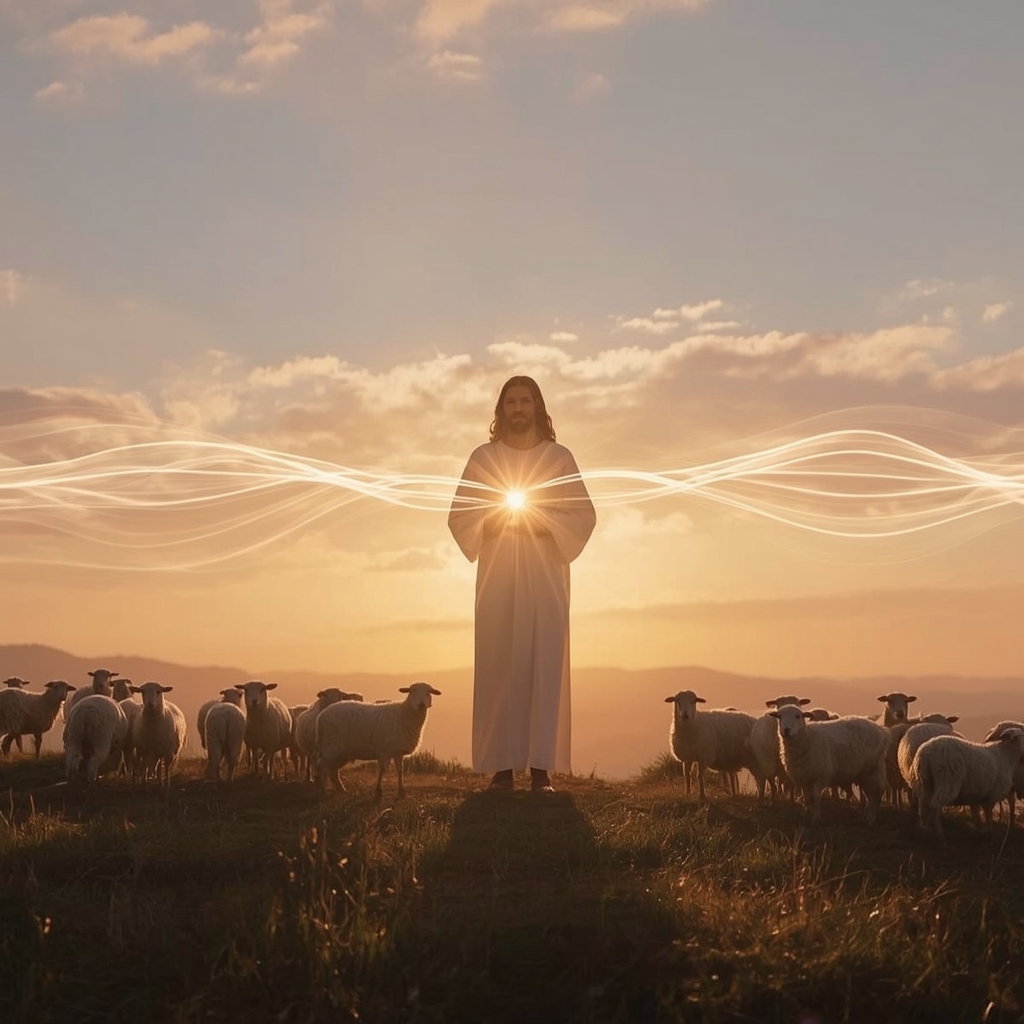






 In The Heart Of The Father